The Pause Before the Scan: A Short Essay on Deliberate Deposits
The Pause Before the Scan: A Short Essay on Deliberate Deposits
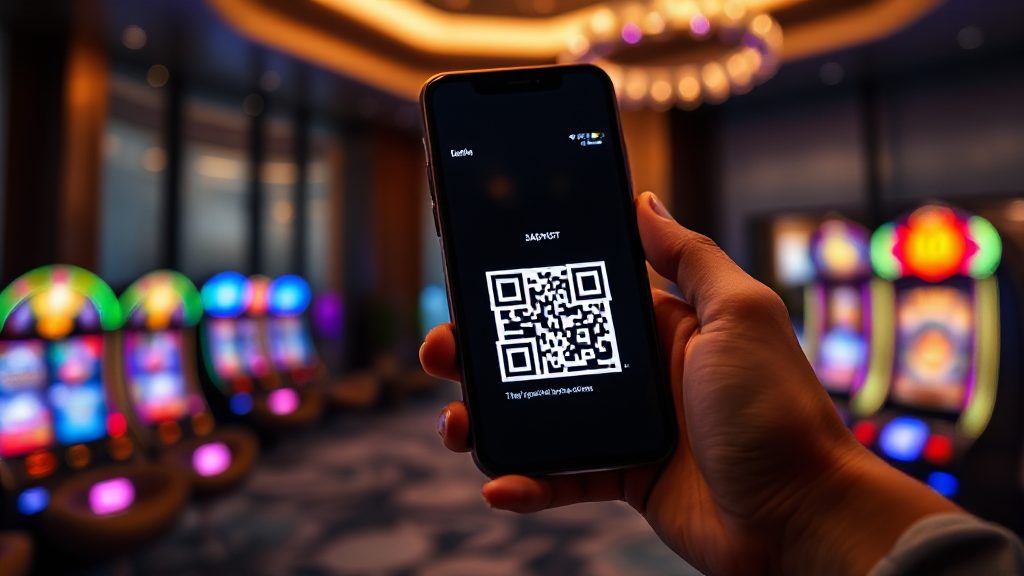
You are holding your phone. The screen shows a QR code, crisp black squares on white, and below it a number you have already chosen. Your thumb hovers. In that small silence — two seconds, maybe three — nothing has happened yet. On a platform like slot88, the deposit is not the scan; it is the decision that precedes it. This essay is about that decision, and why it deserves a little room.
The Silence Between Intention and Action
Most digital transactions are designed to erase friction. One tap, one confirmation, one more tap. The interface wants you to move quickly, because speed feels like convenience. But speed also removes the moment when you could still change your mind. The pause before the scan is the last piece of that moment.
When you open a QRIS payment screen, the app has already done its work. The amount is set. The merchant is identified. What remains is your consent. That consent is not a formality; it is the whole point. A deliberate deposit begins with noticing that you are about to act, not just reacting to a prompt.
There is a physical quality to this pause. The phone is warm in your hand. The room is quiet or not. You might hear a notification arrive and ignore it. In that interval, you are not a user completing a flow — you are a person making a choice. Deliberation is the difference between a transaction and a decision.
What a QR Code Asks of You
A QR code is a compact request. It says: point your camera here, confirm the amount, and send. On slot platforms that accept QRIS, the minimum can be as low as five thousand rupiah, which makes the request feel small. Small requests are easy to approve without thinking. That is precisely why they deserve the same pause as large ones.
The code itself carries no judgment. It does not know whether you have budgeted for this deposit or whether you are chasing a previous outcome. It only knows the amount. The judgment has to come from you, and it has to come before the scan, because after the scan the money has moved.
This is not an argument against depositing. It is an argument for doing it on purpose. A deposit made in a quiet moment is easier to account for later than one made in a hurry. The scan is irreversible; the pause is not.
The Two-Minute Rule and Its Quiet Discipline
Two minutes is not a long time. It is enough to check a balance, recall a budget, and ask a simple question: is this the amount I intended, or the amount the screen suggested? Most people who regret a deposit regret the speed, not the site.
A short deliberate pause also protects against a subtler error: depositing to escape boredom rather than to play. Boredom deposits tend to be larger and less considered. They arrive when the phone is already open and the code is already on screen. The pause interrupts that pattern without requiring willpower.
You do not need an elaborate ritual. You need a habit small enough to keep. The two-minute pause is that habit. It costs nothing, it fits inside any session, and it works whether you are depositing five thousand or five hundred thousand.
Common Mistakes That Skip the Pause
Several familiar mistakes happen when the pause is missing. Recognizing them is easier than avoiding them in the moment, which is why the pause matters.
- Scanning before checking the amount. The screen shows a number; the thumb moves before the eyes confirm it.
- Depositing to recover a loss. The decision is made by frustration, not by plan.
- Treating a low minimum as a low stakes. A five-thousand deposit repeated ten times is still fifty thousand.
- Ignoring the account balance after the scan. The pause includes a glance at what remains.
None of these mistakes require a dramatic fix. They require a few seconds of attention before the code is read. A pause is cheaper than a correction.
Protecting the Pause in a Fast Interface
Interfaces are built to move you forward. That is their job. Your job is to keep one small backward step available. The most practical way to protect the pause is to decide the amount before you open the payment screen, not after. Write it down if you need to. A number chosen in advance is harder to inflate in the moment.
You can also keep the phone at arm’s length for the first few seconds. The physical distance slows the thumb. It sounds trivial, and it is — which is why it works. Small frictions are more durable than grand resolutions.
Finally, treat the confirmation screen as a question rather than a formality. It is asking whether you still agree. Answer it honestly. If the answer is not clear, close the screen and come back later. The code will still be there.
One practical suggestion, then, to carry away: before you scan, name the amount out loud or in your head, and name what it is for. If you cannot say both plainly, wait. The pause before the scan is short, but it belongs to you. Keep it.
