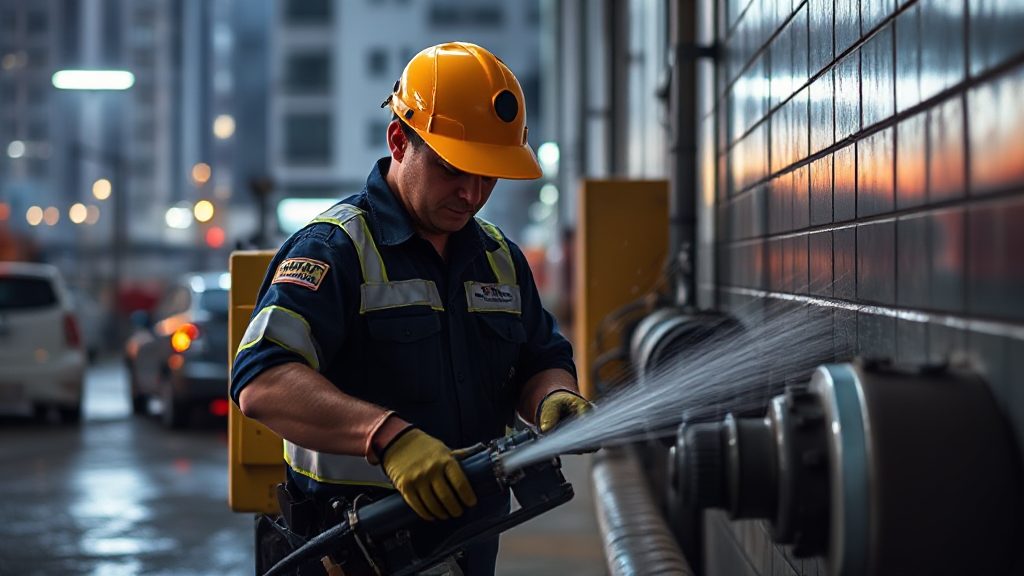
What Does a Desentupidora in São Bernardo do Campo SP Really Charge For?
What Does a Desentupidora in São Bernardo do Campo SP Really Charge For?
Something changed in the last couple of years that most homeowners only notice when the worst happens: emergency drain and sewer services in São Bernardo do Campo stopped being a blind phone call. Since 2024, more local providers publish service scopes, offer itemized quotes, and separate emergency callout fees from the actual unclogging work. That matters because the difference between a fair bill and an inflated one usually comes down to whether you understood what you were paying for before the technician arrived. If you are searching for a desentupidora São Bernardo do Campo SP, the real question is not just who answers fastest — it is what the price actually includes.
I have spent years working alongside drainage crews in the ABC region, and I can tell you the pricing conversation is where most customers lose money. Below is a walkthrough of how a typical job unfolds, what each stage costs, and the lessons I have learned from watching hundreds of service calls in this city.
Why the pricing conversation changed in São Bernardo do Campo
São Bernardo do Campo sits on a mix of older residential streets and newer condominium developments, and the drainage problems reflect that. In the older central neighborhoods, clay and cast-iron pipes are common, and tree roots find them easily. In the newer high-rise areas, grease and improper disposal cause most blockages. A crew that quotes a flat rate before seeing the pipe is guessing — and you usually pay for that guess.
The shift I have seen is toward diagnostic-first pricing. A reputable provider will ask what is clogged, how long it has been happening, and whether other fixtures in the home are backing up. That short conversation tells them whether they are dealing with a simple sink trap or a main sewer line issue. The quote should change based on what is actually blocked, not on how urgently you call.
What changed recently is transparency. More companies now explain that a nighttime emergency visit carries a different callout fee than a scheduled morning appointment, and that hydrojetting costs more than a simple snake because it uses specialized equipment and more water. When I first started, customers rarely asked about the difference between rodding and hydrojetting. Now the good providers explain it before the truck arrives, and that is a healthy change.
What actually happens when you call a desentupidora
The first thing that happens is not the unclogging — it is the triage. When you call a desentupidora São Bernardo do Campo, a dispatcher will ask a series of questions designed to estimate the job before anyone gets in a truck. This is not stalling; it determines what equipment to load and whether a second technician is needed.
The triage questions that set the price
- Which fixture is backing up — one sink, one toilet, or multiple drains at once?
- Is there a smell of sewage inside the home, or water pooling outside?
- Has the problem happened before, and how recently?
- Is the property a house, an apartment, or a commercial kitchen?
- Is there a cleanout access point, or will the technician need to open one?
Each answer changes the scope. Multiple backing-up fixtures usually mean a main line blockage, which requires heavier equipment and often a camera inspection. A single slow sink is usually a trap or branch line issue and can be resolved faster. The dispatcher’s questions are the first cost estimate you will get, so answer them precisely.
Arrival and inspection
Once the crew arrives, the technician should inspect before quoting a final price. This is where honest providers separate themselves. A quick visual check of the accessible drains, a look at the cleanout, and sometimes a camera run into the line tells them whether they are dealing with grease, roots, scale, or a collapsed pipe. If a provider quotes a final price without looking at anything, treat that as a warning sign.
The inspection itself may carry a small fee, especially if a camera is used. Ask upfront whether the inspection fee is deducted from the service if you proceed. Many local companies do this, and it is a fair arrangement — you pay for the diagnosis only if you walk away from the job.
Breaking down the cost: what you are actually paying for
When a customer tells me they were charged R$ 800 for a job that “took ten minutes,” I usually find that the bill included several line items they never noticed. Here is how a typical itemized service breaks down in São Bernardo do Campo.
| Cost component | What it covers | When it applies |
|---|---|---|
| Callout fee | Travel, technician time, basic equipment | Every visit, higher at night and on weekends |
| Inspection fee | Camera or visual diagnosis of the line | When the blockage source is unclear |
| Unclogging labor | Rodding, snake, or manual clearing | Simple to moderate blockages |
| Hydrojetting | High-pressure water cleaning of the pipe walls | Grease, scale, and recurring blockages |
| Cleanout opening | Accessing a buried or sealed cleanout | When no access point exists |
| Post-service cleanup | Removing debris and disinfecting the area | Most jobs, sometimes optional |
The callout fee is the line item people resent most, but it is also the most predictable. In this region, a daytime callout is typically lower than a nighttime or holiday visit. That is not a scam — it reflects overtime labor and the cost of keeping a crew on standby. Ask for the callout fee before you agree to the visit, not after.
Hydrojetting is the other line item that surprises people. It costs more than rodding because it uses a truck-mounted pressure unit and takes longer. But for a grease-clogged commercial kitchen line or a root-invaded sewer, it is often the only service that actually solves the problem instead of pushing it downstream. Paying for rodding three times costs more than paying for hydrojetting once.
Emergency versus scheduled: why the same job has two prices
The single biggest factor in what you pay is timing. A scheduled weekday appointment gives the provider flexibility to route a crew efficiently and use daylight. An emergency call at 11 p.m. on a Sunday forces them to mobilize a standby team, often pulling a technician away from rest. That premium is real, and it is standard across the industry.
What you should watch for is a provider who inflates the emergency premium beyond reason. A fair nighttime rate is higher than daytime, but it should still be explained in advance. If you call a desentupidora em São Bernardo do Campo SP and the dispatcher cannot tell you the nighttime callout fee before sending someone, that is a red flag. The good ones quote it on the phone.
My practical advice: if the blockage is inconvenient but not causing damage — a slow shower drain, a kitchen sink that drains slowly — wait for a weekday morning. If sewage is backing into the home or water is pooling near the foundation, pay the emergency premium. The cost of water damage and remediation almost always exceeds the difference in callout fees.
The mistakes that make a cheap job expensive
I have seen customers save R$ 200 on a callout only to spend R$ 2,000 repairing a pipe that a careless technician damaged. The most common mistakes are predictable.
Hiring on price alone
The lowest quote is often the one that skips the inspection. A crew that snakes a line without checking what caused the blockage may push roots or grease further down, creating a worse problem a few weeks later. A slightly higher quote that includes diagnosis is usually the cheaper option over time.
Ignoring recurring blockages
If the same drain clogs every few months, the problem is not the drain — it is the pipe condition or the way the line is used. Repeated rodding treats the symptom. A camera inspection and hydrojetting treat the cause. Customers who ignore the pattern end up paying for four service calls a year instead of one proper cleaning.
Not asking about the warranty
Most reputable providers offer a short warranty on the service — typically 30 to 90 days. If the same blockage returns within that window, they should return at no charge. Ask about this before the work begins. A provider who will not stand behind the service for at least a month is telling you something about their confidence in the job.
What a fair quote looks like in practice
A fair quote in this region has three characteristics. First, it is itemized — you can see the callout, the labor, and any equipment charges separately. Second, it is conditional on inspection, meaning the provider reserves the right to adjust after seeing the line, but explains the range upfront. Third, it is documented — you receive it in writing or by message before the technician starts.
When I shadowed crews in the ABC region, the jobs that went smoothly were the ones where the customer asked three questions on the phone: What is the callout fee? Is the inspection included or separate? What is the warranty? Providers who answered those clearly tended to deliver exactly what they quoted. Providers who deflected tended to add charges later.
It also helps to know what is not included. Many quotes exclude the cost of opening a wall or floor to access a pipe, replacing a damaged cleanout cap, or disposing of large amounts of removed debris. These are legitimate extras, but they should be discussed before work begins, not presented as a surprise on the invoice.
Preventive maintenance: the cost you pay to avoid the bigger one
The customers who spend the least on emergency drainage are the ones who schedule preventive maintenance. For a residential property, an annual inspection of the main line and a hydrojetting of grease-prone lines costs a fraction of an emergency callout. For condominiums and commercial kitchens, quarterly maintenance is common and pays for itself in avoided shutdowns.
Preventive service also catches problems early. A camera inspection can identify root intrusion, pipe scaling, or a developing collapse before it becomes a backup. Fixing a small section of pipe is far cheaper than replacing a collapsed line under a finished floor. Maintenance is not an upsell — it is the difference between a planned expense and a crisis.
If you manage a building, keep a simple log of every service call: date, fixture affected, service performed, and provider. Patterns emerge quickly. A line that needs attention every six months is telling you something, and acting on that information is cheaper than reacting to it.
Lessons from the routine: what I would tell a neighbor
After years of watching these jobs unfold, my advice comes down to a short list. Call a provider that asks questions before quoting. Ask for the callout fee, the inspection policy, and the warranty on the phone. Do not choose the lowest price if it skips diagnosis. Treat recurring blockages as a symptom, not an inconvenience. And schedule maintenance before the emergency, not after.
The market in São Bernardo do Campo has become more transparent, but transparency only helps customers who ask. The difference between a fair bill and an inflated one is rarely the provider — it is whether the customer understood the scope before saying yes. A desentupidora São Bernardo do Campo that explains its pricing clearly is worth the call, because the conversation itself tells you whether the job will be done right.
